The health sector, including healthcare workers and professionals are the backbone of a country's defenses to save lives and limit the spread of disease. They play a central and critical role in global response efforts to the COVID-19 pandemic. Healthcare workers face higher risks of potential COVID-19 infection in their efforts to protect the greater community and are exposed to hazards such as psychological distress, fatigue and stigma. WHO is providing essential advice, guidance and training for the health sector in critical areas from infection prevention and control, clinical management to health care worker rights and protection and mental health.
Advice
Recommendations for health workers with high risk for infection:
- Stop all health care interaction with patients for a period of 14 days after the last day of exposure to a confirmed COVID-19 patient;
- Be tested for COVID-19 virus infection;
- Quarantine for 14 days in a designated setting.
Recommendations for health workers with low risk for COVID-19 infection:
- Self-monitor temperature and respiratory symptoms daily for 14 days after the last day of exposure to a COVID-19 patient. HCWs should be advised to call health care facility if he/she develop any symptoms suggestive of COVID-19;
- Reinforce contact and droplet precautions when caring for all patients with acute respiratory illness2 and standard precautions to take care of all patients; - Reinforce airborne precautions for aerosol generating procedures on all suspect and confirmed COVID-19 patients;
- Reinforce the rational, correct and consistent use of personal protective equipment when exposed to confirmed COVID-19 patients;
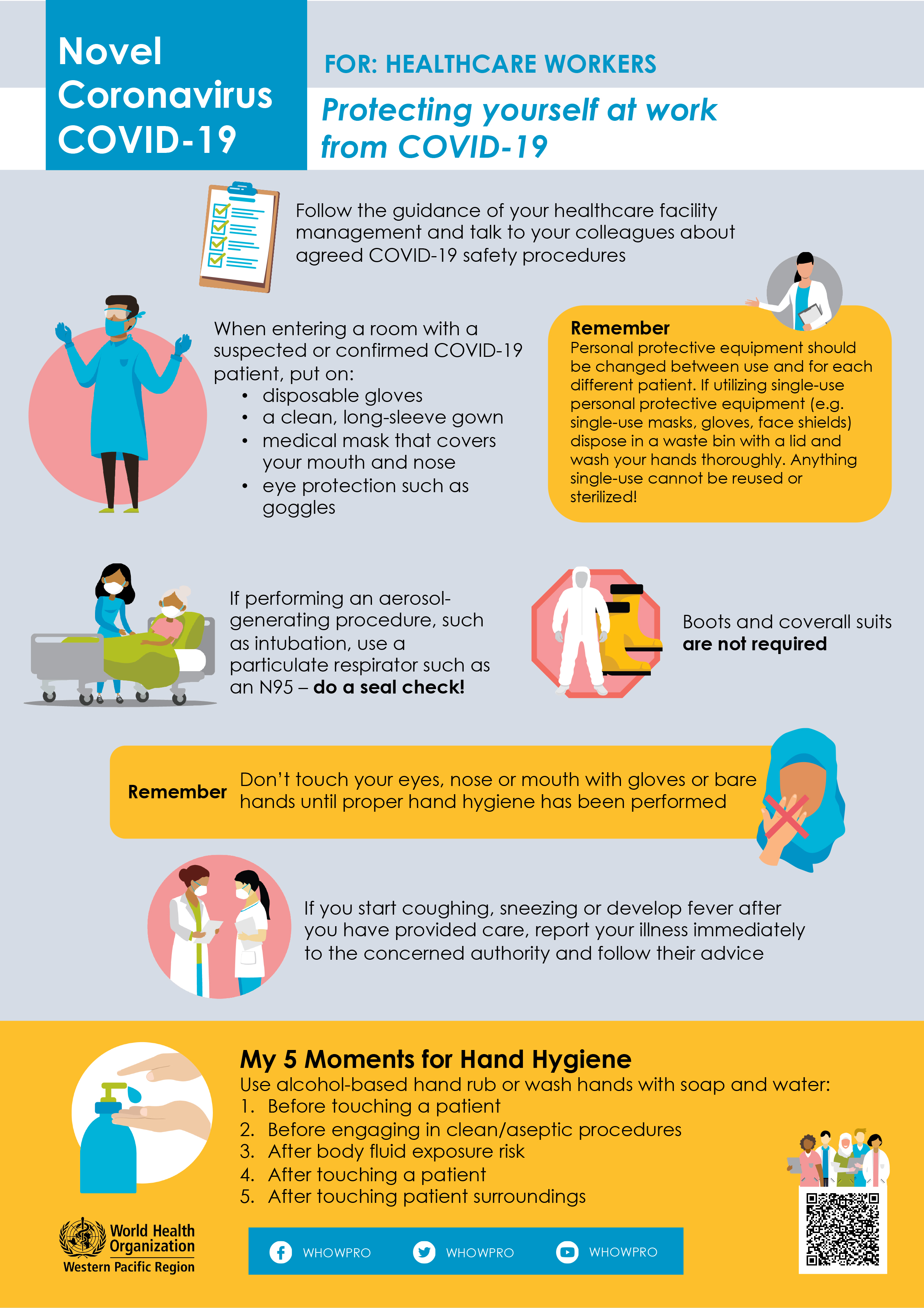
- Apply WHO’s “My 5 Moments for Hand Hygiene” before touching a patient, before any clean or aseptic procedure, after exposure to body fluid, after touching a patient, and after touching patient’s surroundings;
- Practice respiratory etiquette at all times.
Guidance
Rights, roles & responsibilities intro & doc
Health workers are at the front line of any outbreak response and as such are exposed to hazards that put them at risk of infection with an outbreak pathogen (in this case COVID-19). Hazards include pathogen exposure, long working hours, psychological distress, fatigue, occupational burnout, stigma, and physical and psychological violence. This document highlights the rights and responsibilities of health workers, including specific measures needed to protect occupational safety and health.
Health care facilities should provide:
- Psychosocial support to health workers during quarantine, or duration of illness if a health worker becomes a confirmed COVID-19 case;
- Compensation for the period of quarantine and for the duration of illness (if not on a monthly salary) or contract extension for duration of quarantine/illness;
- Refresher infection prevention and control training for the health care facility staff, including health workers at high risk for infection once he/she returns to work at the end of the 14-day period.
Health worker exposure & risk management intro & tools
This tool is to be used by health care facilities that have either cared for or admitted COVID-19 patients; it is to be completed for all health workers who have been exposed to a confirmed COVID-19 patient in a health care facility. It will help determine the risk of COVID-19 virus infection of all HCWs who have been exposed to a COVID-19 patient and then provides recommendations for appropriate management of these HCWs, according to their infection risk.
Tool – Data template – Data dictionary
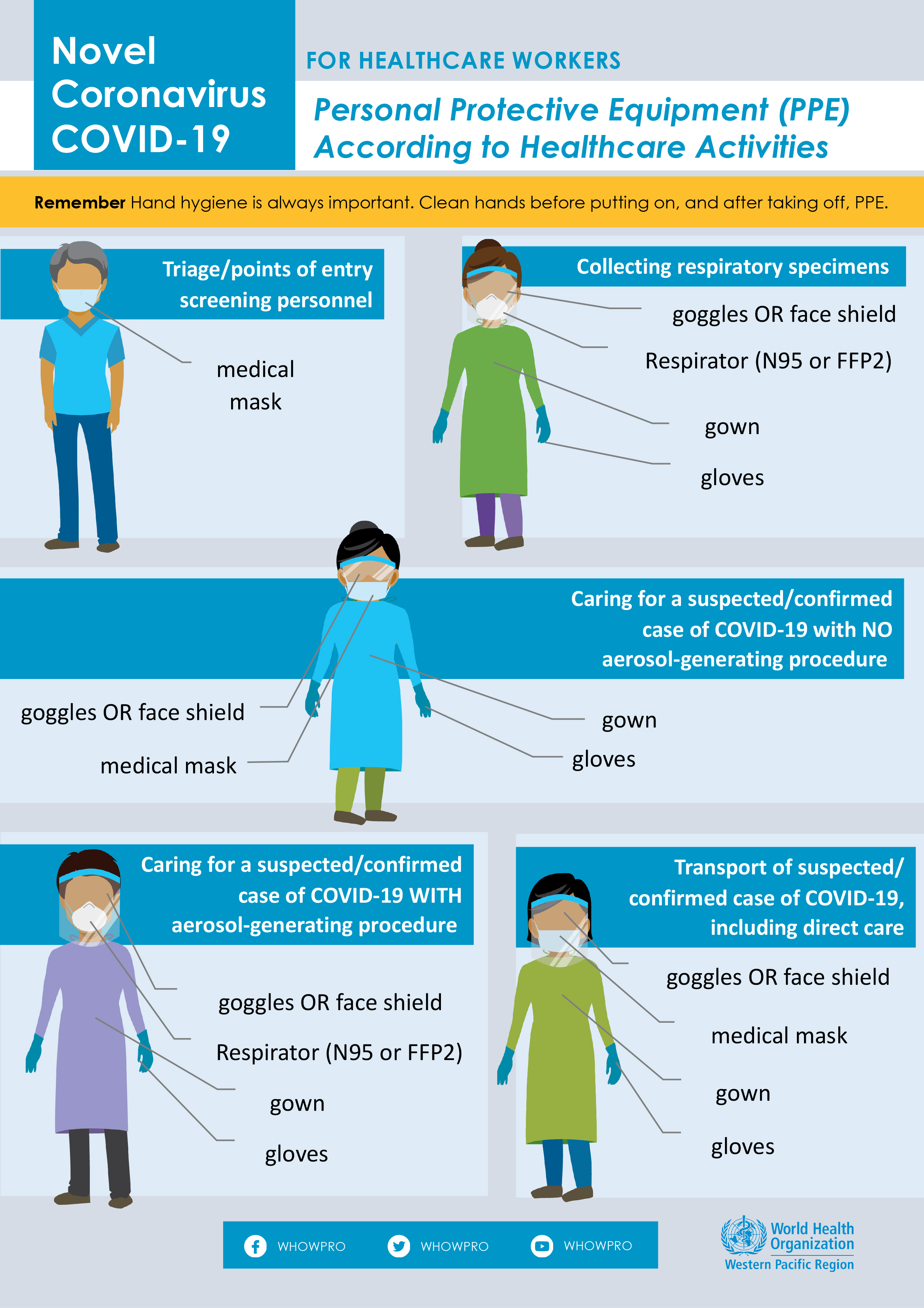
Rational use of PPE
This document summarizes WHO recommendations for the rational use of personal protective equipment (PPE), in health care and community settings, including the handling of cargo. This document is intended for those involved in the distribution and management of PPE, as well as public health authorities and individuals in health care and community settings to understand when PPE use is most appropriate.
Staff Management
Health care facilities should:
- Provide psychosocial support to HCW during quarantine, or duration of illness if HCW becomes a confirmed COVID-19 case;
- Provide compensation for the period of quarantine and for the duration of illness (if not on a monthly salary) or contract extension for duration of quarantine/illness;
- Refresher infection prevention and control training for the health care facility staff, including HCWs at high risk for infection once he/she returns to work at the end of the 14-day period.
Personal Protective Equipment
Advice on the use of masks
This document provides rapid advice on the use of medical masks in communities, at home and at health care facilities in areas that have reported outbreaks caused by the 2019 data-sf-ec-immutable="" novel coronavirus[KC1] . It is intended for public health and infection prevention and control (IPC) professionals, health care managers, health care workers and community health workers.
Q&A on infection prevention and control for health care workers caring for patients with suspected or confirmed COVID-19
Are boots, impermeable aprons, or coverall suits required as routine person protective equipment (PPE) for healthcare workers (HCW) caring for patients with suspected or confirmed 2019-nCoV infection? Can disposable medical face masks be sterilized and reused? Do patients with suspected or confirmed 2019-nCoV need to be hospitalized if they have mild illness?
Here you will find answers to these and other questions related to infection prevention and control for health care workers caring for patients with suspected or confirmed COVID-19.
Mental health, psychosocial support, psychological first aid
IASC Guidelines on Mental Health and Psychosocial Support in Emergency Settings
These guidelines support humanitarian actors and communities to plan, establish and coordinate a set of minimum multi-sectoral responses to protect and improve people's mental health and psychosocial well-being in the midst of an emergency. The composite term mental health and psychosocial support is used in this document to describe any type of local or outside support that aims to protect or promote psychosocial well-being and/or prevent or treat mental disorder. These guidelines are not intended solely for mental health and psychosocial workers.
The COVID-19 risk communication package for healthcare facilities
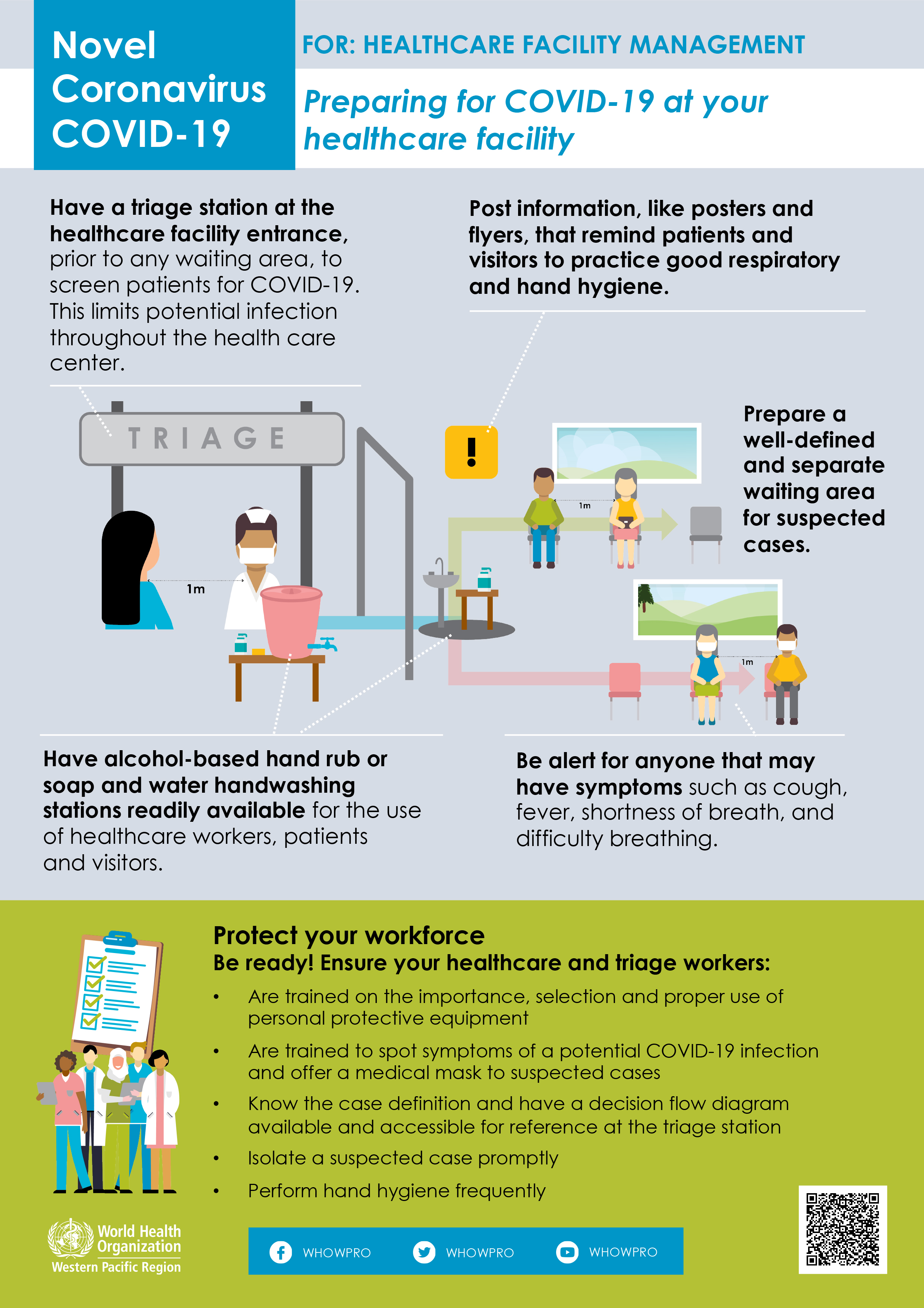
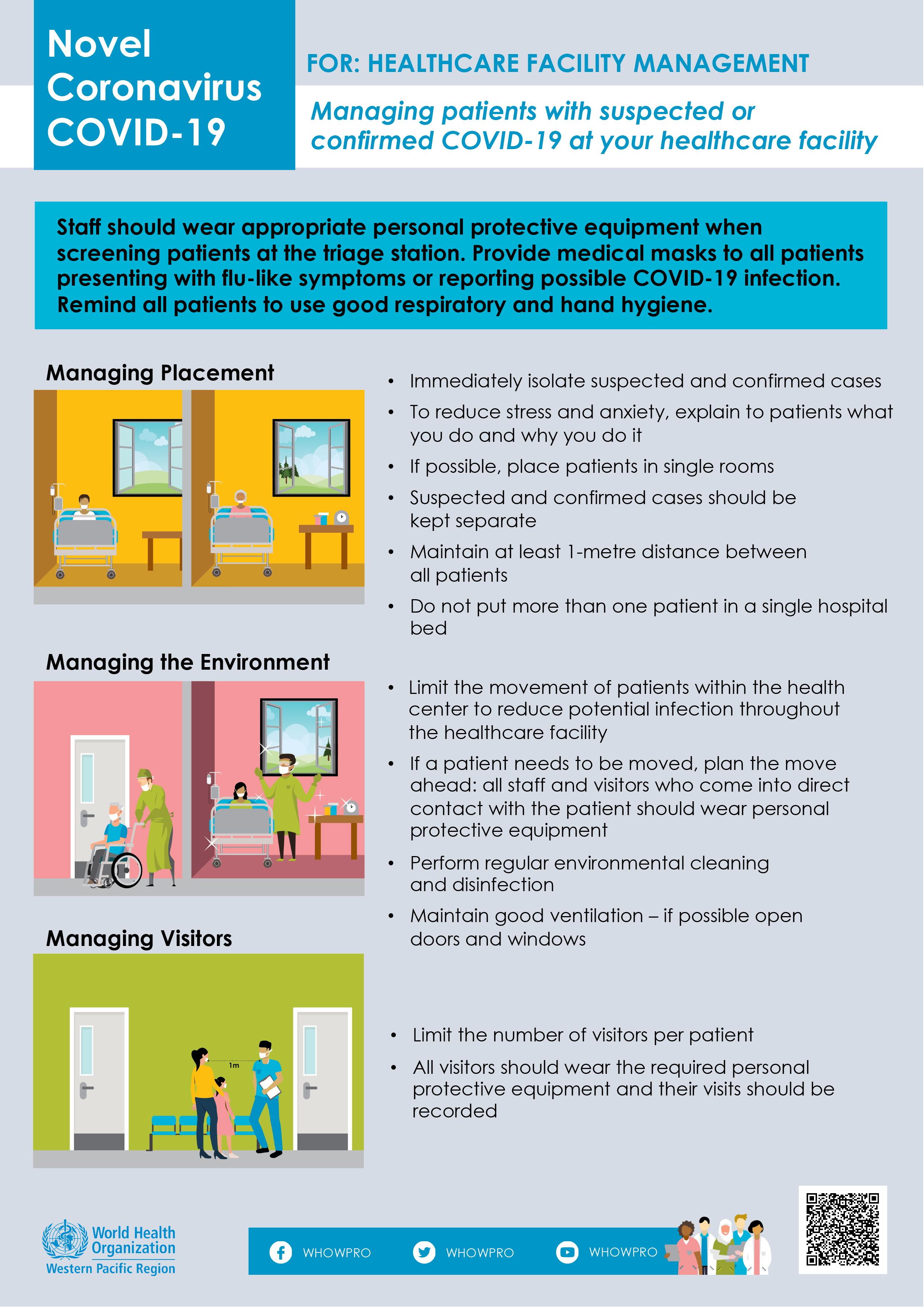
In response to the COVID-19 outbreak this risk communication package for healthcare facilities provides healthcare workers (HCWs) and healthcare facility management with the information, procedures, and tools required to safely and effectively work. The package contains a series of simplified messages and reminders based on WHO's more in-depth technical guidance on infection prevention and control in healthcare facilities in the context of COVID-19: "Infection prevention and control during health care when novel coronavirus (nCoV) infection is suspected" (25 January 2020). HCWs play a critical role in outbreak response and are the backbone of a country's defenses to limit or contain the spread of disease. They face higher risks of potential COVID-19 infection in their efforts to protect the greater community and are exposed to hazards such as psychological distress, fatigue and stigma. WHO recognizes this essential work and the responsibility and importance of protecting the healthcare facility workforce.
Infection Prevention and Control
Infection prevention and control during health care when COVID-19 infection is suspected
This is the first edition of guidance on infection prevention and control strategies for use when infection with COVID-19 is suspected. WHO will update these recommendations as new information becomes available. This guidance is intended for healthcare workers, healthcare managers and IPC teams at the facility level but it is also relevant for the national and district/provincial level. Full guidelines are available.
Water, sanitation, hygiene and waste management for COVID-19
This technical brief supplements existing IPC documents by referring to and summarizing WHO guidance on water, sanitation and health care waste which is relevant for viruses (including coronaviruses). It is written in particular for water and sanitation practitioners and providers.
Clinical care
Clinical management of patients with suspected COVID-19 infection
Short guidance is available for clinicians taking care of hospitalised adult and paediatric patients with severe acute respiratory infection. It is not meant to replace clinical judgment or specialist consultation but rather to strengthen clinical management of these patients and provide to up-to-date guidance.
Home care for patients with suspected COVID-19 infection presenting with mild symptoms and management of contacts
This rapid advice note was developed to meet the need for recommendations on the safe home care for patients with suspected COVID-19 infection who present with mild symptoms and to define public health measures related to management of asymptomatic contacts.
Prevention of violence
Measures for zero-tolerance of violence should be established in all health facilities and for protection of health workers in the community. Workers should be encourage to report incidences of verbal, physical violate and sexual harassment. Security measures, including guards, panic buttons, cameras should be introduced. Staff should be trained in prevention of violence.
Prevention of fatigue
Develop working time schemes for the scheme for the different categories of health workers involved - ICUs, primary care, first responders, ambulances, sanitation etc., including maximum working hours per work shift (five eight-hours or four 10-hour shifts per week), frequent rest breaks (e.g. every 1-2 hours during demanding work) and minimum 10 consecutive hours of rest between work shifts.[1]
Compensation, hazard pay, priority treatment
Excessive hours of work should be discouraged. Ensure adequate staffing levels to prevent excessive individual workloads, and minimize the risk of unsustainable working hours. Where extra hours are necessary, compensatory measures such as overtime pay or compensatory time off should be considered. Where necessary, and in a gender-sensitive manner, consideration should be given to mechanisms for determining hazardous duty pay. Where exposure and infection are work-related, health and emergency workers should be provided with adequate compensation, including when quarantined. In the event of scarcity of treatment for those contracting COVID19, each employer should develop, through social dialogue, a treatment distribution protocol and specify the priority of health and emergency workers in receiving treatment.
Infographics

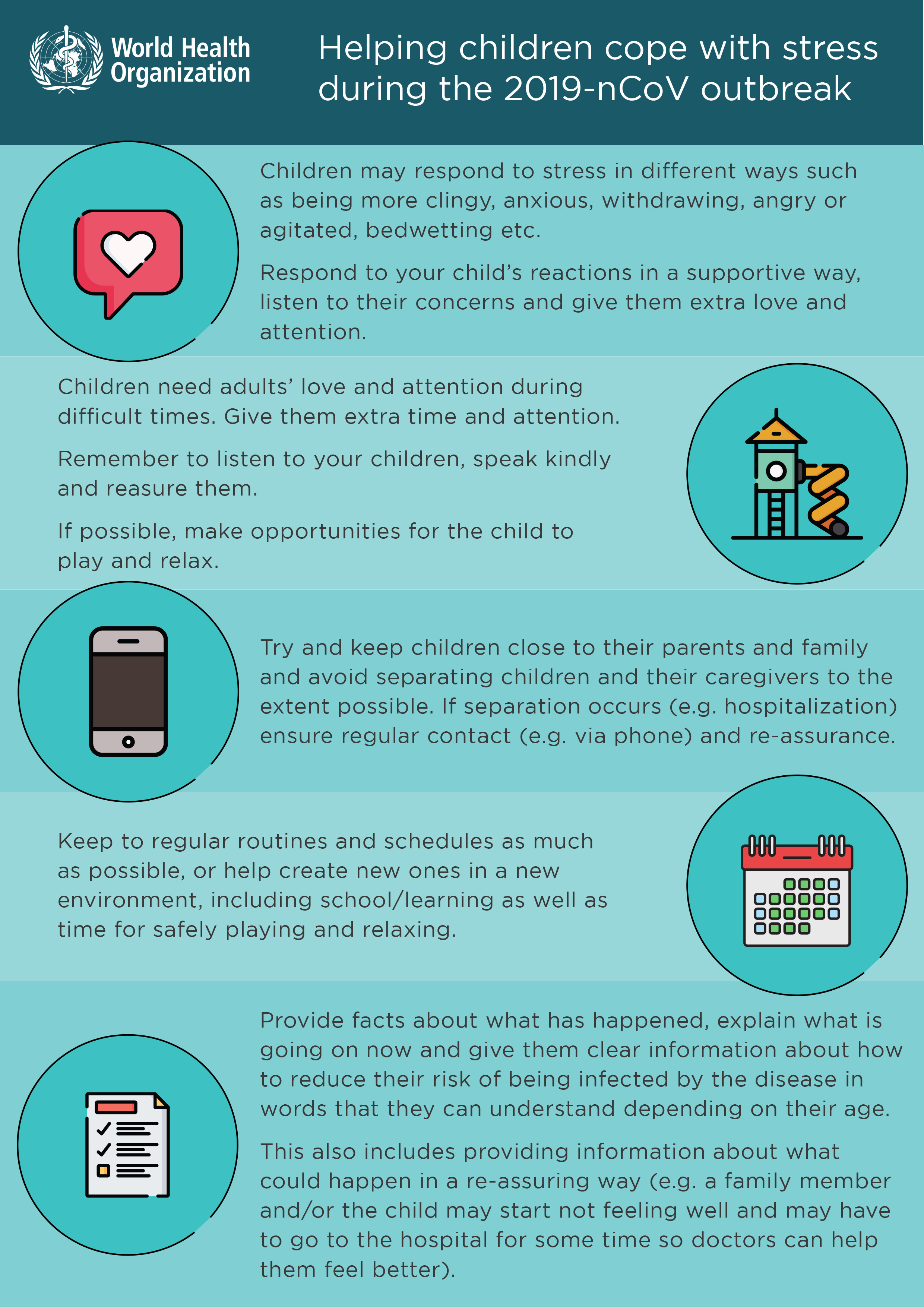
Comments
Post a Comment