WHO information network for epidemics for Travel and Tourism


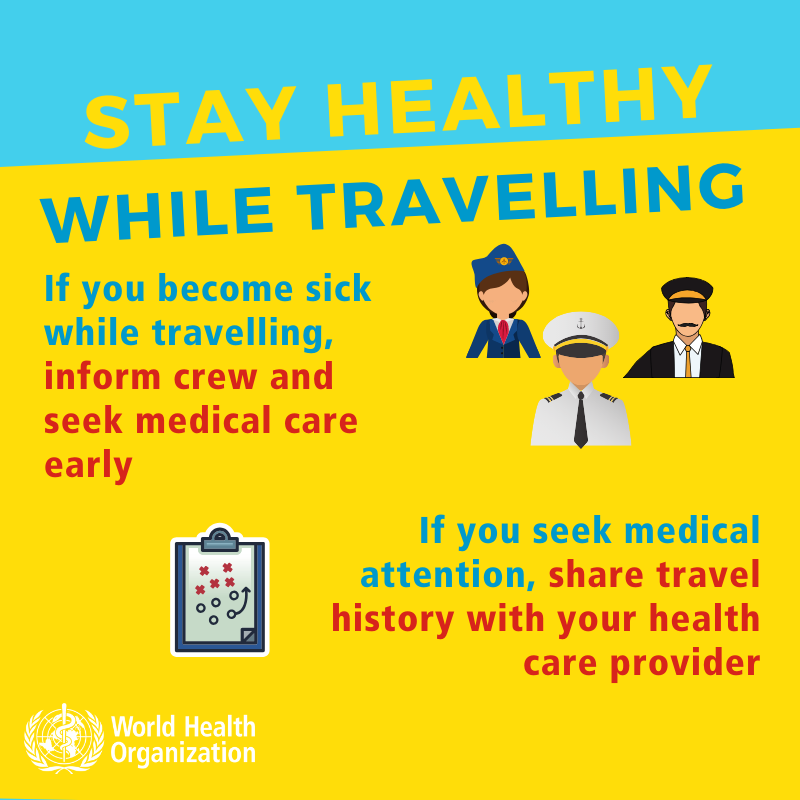
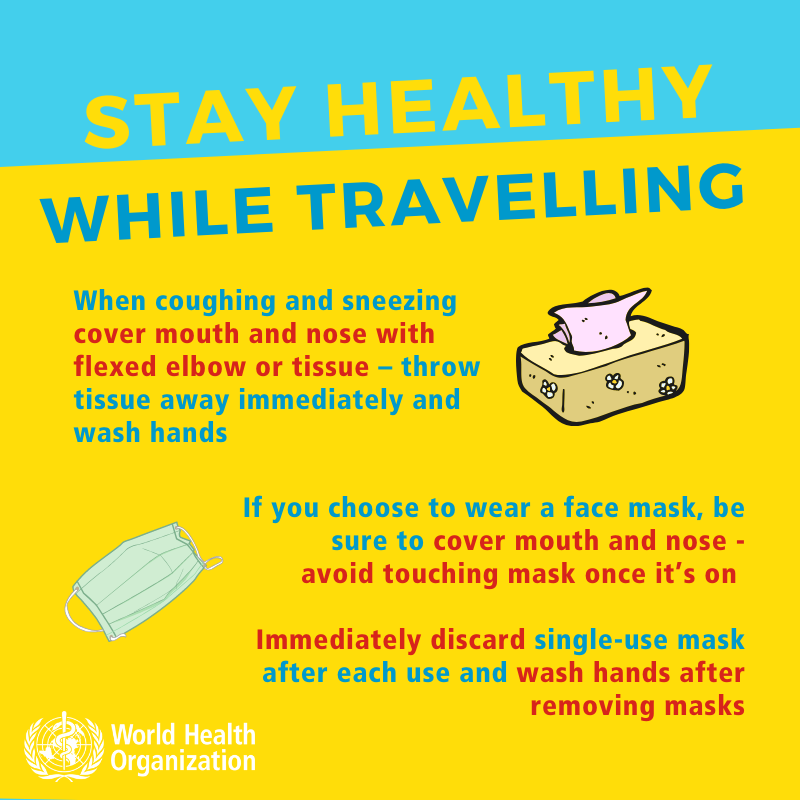
The travel and tourism sector and the people who work in it are often hugely impacted when global outbreaks occur. WHO is providing updated advice and guidance for the travel and tourism sector to help protect their employees and address critical issues, concerns, and questions in regards to travel recommendations and advice and detailed guidance on what the sector could do support minimizing the spread of COVID-19.

Guidance

MANAGEMENT OF ILL TRAVELLERS AT POINTS OF ENTRY:

Management of ill travellers at Points of Entry – international airports, seaports and ground crossings – in the context of COVID -19 outbreak

This document aims to provide advice on the detection and management of ill travellers suspected of COVID-19 infection, at international airports, ports and ground crossings.

Access the document


PUBLIC HEALTH PREPAREDNESS AND RESPONSE FOR AVIATION SECTOR:

    Handbook for the Management of Public Health Events in Air Transport

    The target audience for this guidance document includes the national focal points (NFP) for the IHR and public health authorities at PoE, as well as national aviation regulatory authorities, airport operators and personnel, aircraft operators, air crew and other stakeholders involved in air transport and emergency preparedness and response to public health events.

    Access the handbook

    Operational considerations for managing COVID-19 cases or outbreak in aviation

    Access the handbook

    PUBLIC HEALTH PREPAREDNESS AND RESPONSE FOR MARITIME SECTOR:

    Operational considerations for managing COVID-19 cases/outbreak on board ships

    The target audience of this documents is any authority involved in public health response to
    a COVID-19 public health event on board ships, including International Health Regulations
    (IHR) National Focal Point (NFP), port health authorities, local, provincial and national health
    surveillance and response system, as well as port operators and ship operators.

    Access the document

    Handbook for management of public health events on board ships

    To assist States Parties in contingency planning and implementation of health measures on board ships or in ports, WHO developed a generic guidance addressing all public health risks and related rules and regulations. 

    Access the handbook

    Handbook for inspection of ships and issuance of ship sanitation certificates

    This handbook is intended to be used as reference material for port health officers, regulators, ship operators and other competent authorities in charge of implementing the IHR (2005) at ports and on ships.

    Access the handbook


    RISK COMMUNICATION AND COMMUNITY ENGAGEMENT:

      A guide to preventing and addressing social stigma associated with COVID-19

      Social stigma in the context of health is the negative association between a person or group of people who share certain characteristics and a specific disease. In an outbreak, this may mean people are labelled, stereotyped, discriminated against, treated separately, and/or experience loss of status because of a perceived link with a disease. 

      The current COVID-19 outbreak has provoked social stigma and discriminatory behaviours against people of certain ethnic backgrounds as well as anyone perceived to have been in contact with the virus.

      Access the publication

      Mental Health Considerations during COVID-19 Outbreak

      These mental health considerations were developed by the Mental Health Department as support for mental and psychological well-being during COVID-19 outbreak.

      Access the publication


      Graphics

      Click on graphics to view and download

      Video

      Comments

      Popular posts from this blog

      WHO information network for epidemics - Faith based Organisation and faith leaders

      Faith-based organizations (FBOs) and leaders can play a major role in saving lives and reducing illness related to COVID-19. They are a primary source of support and comfort for their members.  Often trusted more than governments or health-agencies, faith leaders can share health information to protect their communities that will be more likely to be accepted than from other sources.  By sharing simple steps to prevent COVID-19 faith organizations can promote helpful information, reduce fear and stigma, and provide reassurance to people in their communities.  Because faith leaders are integrated into their communities through service and compassionate networks, they are often able to reach the most vulnerable among us with assistance and health information. In short, they are a critical link in the safety net for vulnerable people in their communities.  Advice Recommendations for faith-based organizations (FBOs) to ensure safe gatherings (where permitted) Follow loca...

      WHO information network for epidemics in Health Sector

      The health sector, including healthcare workers and professionals are the backbone of a country's defenses to save lives and limit the spread of disease. They play a central and critical role in global response efforts to the COVID-19 pandemic. Healthcare workers face higher risks of potential COVID-19 infection in their efforts to protect the greater community and are exposed to hazards such as psychological distress, fatigue and stigma.  WHO is providing essential advice, guidance and training for the health sector in critical areas from infection prevention and control, clinical management to health care worker rights and protection and mental health.   Advice Recommendations for health workers with high risk for infection: Stop all health care interaction with patients for a period of 14 days after the last day of exposure to a confirmed COVID-19 patient; Be tested for COVID-19 virus infection; Quarantine for 14 days in a designated setting. Recommendations for health work...

      Q&A on Mass Gatherings and COVID-19

      How large does a meeting or event need to be in order to be a “mass gathering”? High profile international sporting events such as the Olympics or World Cups as well as international religious events such as the Hajj count as mass gatherings. However, lower profile conferences and events can also meet WHO’s definition of a mass gathering. An event counts as a “mass gatherings” if the number of people it brings together is so large that it has the potential to strain the planning and response resources of the health system in the community where it takes place. You need to consider the location and duration of the event as well as the number of participants. For example, if the event takes place over several days in a small island state where the capacity of the health system is quite limited then even an event with just a few thousand participants could place a big strain on the health system and then be considered a “mass gathering” event. Conversely, if the event is held in a big cit...